Global Travel in 2026: Tourism Is Growing Again, but the Way the World Travels Is Changing
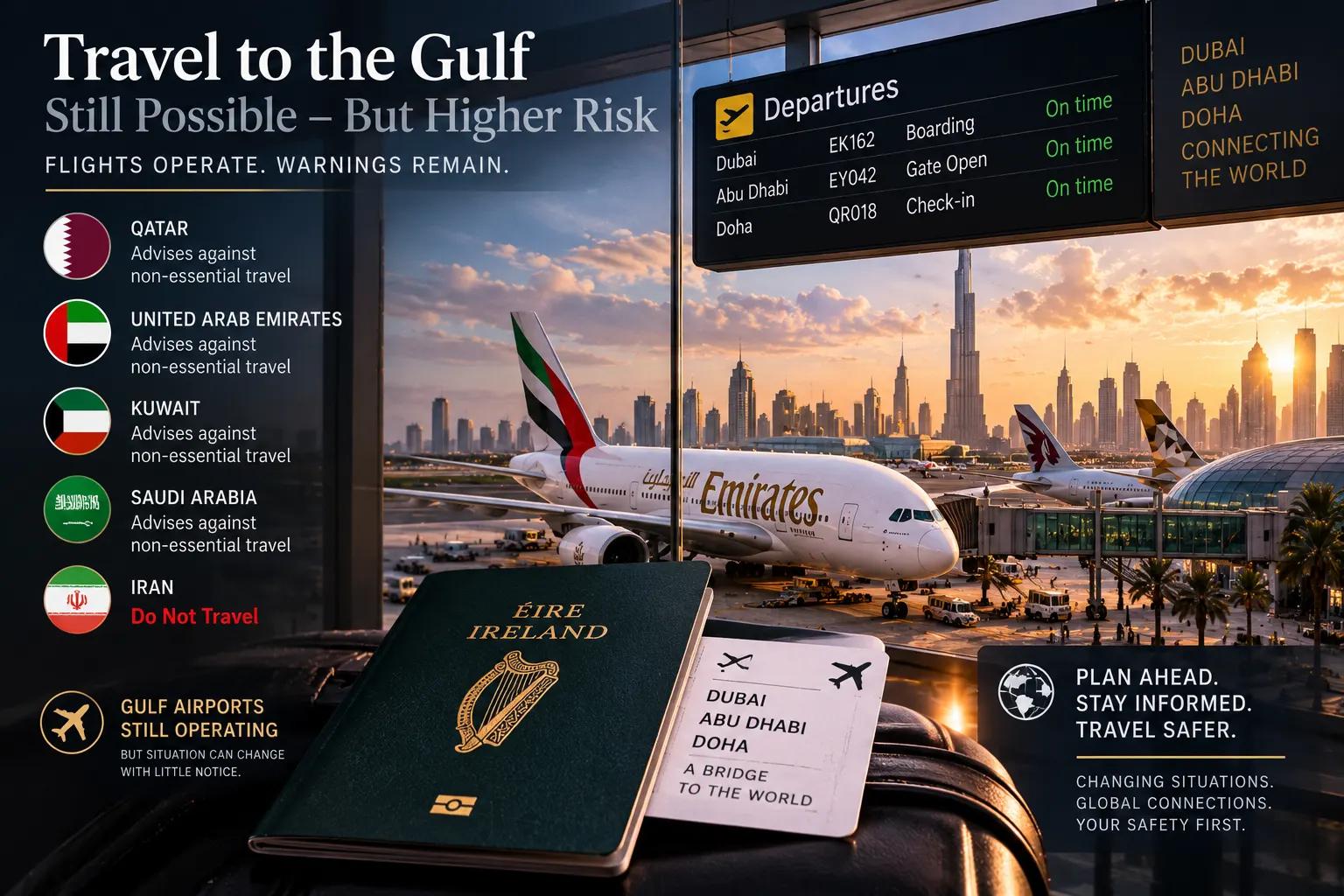
Europe is welcoming record numbers of visitors while North America has emerged from a historic World Cup summer. Yet slower air-traffic growth, higher fuel costs, digital borders, short-term rental regulation and pressure on crowded destinations are pushing global tourism into a new phase.
The great travel recovery is largely over.
That does not mean people have stopped travelling. Quite the opposite. International tourism continues to expand, European accommodation is recording more overnight stays, millions are crossing the Atlantic and the 2026 FIFA World Cup has just brought an extraordinary concentration of visitors to Canada, Mexico and the United States.
What has changed is the nature of the growth.
After several years in which the global travel industry was principally trying to recover what it lost during the pandemic, tourism in 2026 is confronting a more complicated question: what happens when the travellers have returned, but airports, cities, accommodation markets, energy systems and local communities cannot simply expand at the same speed?
International tourist arrivals increased by 2% worldwide during the first quarter of 2026, according to UN Tourism. Europe, already the world’s largest destination region, welcomed more than 130 million international visitors during those three months, 4% more than in the same period of 2025.
That follows an already exceptional year.
Europe received approximately 793 million international tourists in 2025, 4% more than in 2024 and around 6% above 2019 levels. Across the European Union, tourist accommodation establishments recorded an estimated 3.08 billion overnight stays during 2025 — another record.
Travel has therefore moved beyond simple recovery.
The defining issues now are capacity, affordability, geography and resilience.
The World Is Still Travelling — Just More Slowly
The first years after pandemic restrictions ended produced extraordinary growth rates because tourism was rebuilding from an artificially depressed base.
That phase could never continue indefinitely.
UN Tourism initially expected international tourist arrivals to rise by between 3% and 4% in 2026. More recent assessments have become more cautious as geopolitical disruption has affected transport networks and economic confidence.
The pattern is already visible in aviation.
Global airline passenger demand fell by 1.7% year on year in June 2026, according to the International Air Transport Association. International demand was 0.9% lower, although excluding the Middle East it remained 1.1% higher. Domestic passenger traffic contracted by 3%.
Those numbers should not be interpreted as evidence that international travel is collapsing.
Aircraft remained extremely full. The global passenger load factor in June was 84.2%, while European airlines operated at 87.1% on international services.
Instead, the data points to a market becoming more mature and more constrained.
Travellers are still travelling.
But airlines are no longer adding capacity at the extraordinary rates seen during the rebound, and energy costs, airspace restrictions, economic uncertainty and infrastructure limitations are beginning to matter more.
Europe Has Become Bigger Than Its Pre-Pandemic Tourism Market
Europe’s tourism industry has emerged from the disruption of the early 2020s remarkably strongly.
The continent was already the world’s dominant tourism region before the pandemic. Its combination of historic cities, Mediterranean coastlines, cultural attractions, mountain destinations, transport infrastructure and relatively short distances between countries gives it a structural advantage that few other regions can replicate.
By 2025, international arrivals were not merely back to their 2019 level. They were above it.
The momentum continued into 2026.
There were 471.1 million overnight stays in EU tourist accommodation during the first quarter alone, 3.4% more than during the same period of 2025. International visitors generated 5.5% more overnight stays, while domestic tourism grew by a more modest 1.7%.
But the European figures also show how uneven tourism can be.
International visitors accounted for more than 90% of accommodation nights in Malta during the first quarter, while the foreign share was around one-fifth in Germany and Poland. Ireland recorded the strongest overall increase in accommodation nights among EU countries during the quarter, while several other countries recorded declines.
There is therefore no single European tourism economy.
A Mediterranean island dependent heavily on foreign visitors experiences tourism differently from Germany, where domestic travel plays a much larger role.
A historic city faces different pressures from a rural region.
A ski resort has different economics from a coastal destination.
Yet they are all part of the same increasingly interconnected travel market.
Europe’s Success Has Created Its Next Problem
For much of the past several years, the central objective of the travel industry was obvious: bring visitors back.
In parts of Europe, the question is increasingly becoming where to put them.
Tourism is highly concentrated both geographically and seasonally.
In 2025, 31.1% of all overnight stays in EU tourist accommodation took place during just two months — July and August.
The concentration is even more striking in the short-term rental market.
Guests spent 951.6 million nights in EU accommodation booked through major online platforms during 2025, an increase of 11.4% in a year and more than 32% compared with 2023.
The 20 most popular European regions for platform-booked short stays during the third quarter of 2025 were concentrated in just six countries: France, Spain, Italy, Greece, Portugal and Croatia.
Growth continued into 2026.
During the first three months of this year, travellers spent 144.3 million nights in EU short-term rentals booked through Airbnb, Booking or Expedia. That was 9.7% more than a year earlier and 16.6% above the equivalent period in 2024.
The numbers explain why tourism policy is changing.
At destination level, the objective can no longer always be to maximise visitor numbers.
In some places, the more important questions are how visitors are distributed, when they arrive, where they stay and how much local economic value their presence creates relative to the pressure placed on housing, infrastructure and public space.
The Short-Term Rental Boom Is Entering a More Regulated Era
Few developments have changed European travel as quickly as the growth of short-term accommodation platforms.
For travellers, they have expanded choice dramatically.
A family can rent an apartment rather than several hotel rooms. A couple can stay in a neighbourhood with little traditional hotel capacity. Rural homes and secondary properties can enter the tourism market without requiring the development of a conventional accommodation business.
For owners, the platforms opened a global distribution system.
But the rapid expansion has also created policy questions, particularly in cities and regions where tourism demand overlaps with shortages of long-term housing.
The European Union has now introduced a common framework aimed at making the sector more transparent.
Since 20 May 2026, EU rules on data collection and sharing for short-term accommodation have applied across the bloc. The framework provides for host-registration systems where national authorities operate them, standardises information requirements for platforms and gives public authorities better access to reliable activity data.
The regulation does not itself impose one Europe-wide limit on holiday rentals.
That distinction is important.
Local and national authorities retain significant responsibility for determining how short-term rentals are regulated in their own housing and tourism markets.
What Europe has changed is the information infrastructure underneath those decisions.
That may sound technical, but it matters.
Governments cannot effectively manage tourism pressure if they do not know how many properties are being rented, where they are located and how frequently they are occupied.
Europe Is Also Changing the Border Experience
The physical act of entering Europe has changed too.
The European Entry/Exit System, or EES, was progressively introduced from October 2025 and became fully operational on 10 April 2026 across the external borders of 29 participating European countries.
For short-stay visitors from outside the participating European countries, the system digitally records entry and departure information and can collect biometric information including facial images and fingerprints.
The familiar passport stamp is consequently disappearing across much of the Schengen travel area. Ireland and Cyprus remain outside the EES system and continue to use their own border arrangements.
The change is significant because it illustrates where international travel administration is heading.
Airline tickets have become digital.
Boarding passes became digital.
Hotel check-in increasingly happens through apps.
Now border control is becoming digital too.
Europe’s next major change will be ETIAS, the European Travel Information and Authorisation System for visa-exempt travellers.
As of August 2026, ETIAS is not yet operating. The European Union currently expects it to begin in the final quarter of 2026, with the specific launch timetable communicated separately.
Travelling to Europe is therefore becoming simultaneously easier technologically and more data-driven administratively.
Aviation Remains the Engine of Long-Distance Tourism
For all the discussion of trains, sustainable transport and local tourism, one fact remains difficult to escape.
Modern international tourism depends heavily on aviation.
That is especially true between Europe and North America.
There is no realistic mass-market substitute for a transatlantic flight between Dublin and New York, Paris and Toronto or London and Los Angeles.
The economic health of airlines therefore affects far more than airlines themselves.
It influences hotels, restaurants, attractions, car-rental companies, tour operators, cruise departures and entire destination economies.
In 2026, that aviation system remains robust but is under renewed cost pressure.
IATA expects European airline passenger traffic to grow around 2.8% this year, while North American traffic is forecast to expand by only about 0.8%.
June data showed the divergence clearly.
Passenger demand among European carriers was 1.5% higher than a year earlier, while North American carriers recorded a 1% decline. Total North American traffic, including domestic activity, was down 1.1%.
North America’s enormous domestic aviation market partly explains the difference.
When domestic US demand weakens, it can pull down the region’s overall statistics even while international travel remains active.
Fuel Has Returned as a Major Travel Cost
Airlines have always been unusually exposed to energy prices.
Fuel is not an optional input.
A hotel can reduce heating consumption.
A restaurant can alter its menu.
An airline cannot fly an aircraft across the Atlantic without consuming enormous quantities of aviation fuel.
That vulnerability has become more visible again in 2026.
IATA has warned that geopolitical disruption and higher fuel prices are reducing airline profitability and creating additional pricing pressure.
European airlines are forecast to generate around $9.6 billion in net profit in 2026, down from an estimated $13 billion in 2025. North American airlines are forecast at approximately $9.4 billion, compared with $12.4 billion a year earlier.
The effect is unlikely to be uniform.
Airlines hedge fuel differently.
Some operate newer and more efficient aircraft.
Long-haul network carriers have different pricing power from low-cost airlines heavily dependent on domestic or short-haul markets.
But the broad economics are straightforward.
If fuel becomes significantly more expensive, airlines eventually have three principal options: absorb the cost, reduce capacity or charge passengers more.
Usually, the adjustment involves some combination of all three.
The Era of Permanently Cheap Flying Is More Complicated Than It Looks
It would nevertheless be misleading to conclude that air travel has simply become unaffordable.
IATA estimates that average real return air fares, including ancillary revenue, remain substantially below their level a decade ago when adjusted for inflation.
But averages can hide what travellers actually experience.
A passenger travelling outside school holidays from a major airport with several competing airlines may still find extraordinary value.
A family needing four seats during the first weekend of August has a different experience.
A traveller heading to a destination with limited competition may have little bargaining power.
This is one reason the modern travel market can produce apparently contradictory headlines about cheap flights and expensive holidays at the same time.
The airline seat may be affordable.
The hotel may not be.
Or accommodation may be inexpensive while the flight is costly.
The total holiday price is ultimately what matters to the traveller.
North America Has Just Experienced an Extraordinary Travel Experiment
If Europe’s 2026 tourism story is largely about managing sustained demand, North America has just experienced something different: one of the largest concentrated sporting travel events ever staged.
The 2026 FIFA World Cup ran from 11 June to 19 July across Canada, Mexico and the United States.
For the first time, the tournament was staged across three host countries, producing a travel network covering an enormous geographical area.
FIFA recorded 6.81 million spectators entering stadiums across 16 host cities.
The tournament demonstrated a different form of international tourism.
Traditional leisure travellers usually choose the destination first and plan activities afterward.
Major-event tourism reverses the process.
The event determines the destination.
A supporter may travel to a city they would never otherwise have considered because their team happens to play there.
That creates sudden demand for flights, accommodation, local transport and restaurants — followed by an equally sudden return towards normality when the event ends.
For destination planners, the challenge is therefore not simply attracting visitors during the event.
It is converting temporary global attention into longer-term tourism demand.
The United States Is Still Rebuilding Its International Visitor Market
The World Cup has arrived at an important moment for US tourism.
The latest official forecast from the US National Travel and Tourism Office expects international arrivals to the United States to reach approximately 70.5 million in 2026, a 3.2% increase from 68.3 million in 2025.
The agency specifically identifies the World Cup as one factor supporting this year’s growth.
Those figures also reveal how expectations for US inbound tourism have changed.
Earlier official forecasts had been considerably more optimistic, projecting 85 million international visitors in 2026.
The latest outlook is therefore a reminder that tourism forecasts are highly sensitive to economic conditions, exchange rates, transport capacity, traveller sentiment and international relations.
The United States remains one of the world’s most powerful travel markets.
It has New York, Florida, California, Las Vegas, national parks, major sporting events, enormous domestic air networks and globally recognised entertainment attractions.
But sheer destination strength does not guarantee that every international market will grow equally.
Travel decisions are discretionary.
Perception matters.
Price matters.
Currency matters.
And long-haul travellers have more destination choices than ever.
Canada Is Seeing Stronger Cross-Border Movement Again
Canada’s latest travel indicators point towards improving international activity.
US residents made approximately 2.2 million trips to Canada in May 2026, 13% more than during the same month a year earlier.
Arrivals from overseas markets reached about 665,300 during the month, an increase of 6.2%.
June indicators also showed international arrivals continuing to increase year on year.
The World Cup undoubtedly added another unusual layer to the summer.
Toronto and Vancouver were among the tournament’s host cities, while supporters also moved between Canada, the United States and Mexico as the competition progressed.
That cross-border movement underlined one of North America’s distinctive tourism advantages.
Three very different national tourism markets are connected through extensive air networks, highways and one of the world’s largest integrated economic regions.
The distances remain enormous.
But international tourism in North America can increasingly be multi-country rather than single-country travel.
Mexico Is Becoming Still More Important to North American Tourism
Mexico occupies a unique position in global travel.
It is simultaneously a major international beach destination, a cultural and urban tourism market, a cruise destination and an enormous neighbour of the United States.
The country’s tourism growth was already continuing before the World Cup.
In March 2026, Mexico recorded approximately 4.49 million international tourists staying at least one night, 7.1% more than in March 2025. Total international travellers entering the country exceeded 9.3 million during the month when same-day visitors were included.
The World Cup then placed Mexico City, Guadalajara and Monterrey into a global sporting tourism network alongside cities in Canada and the United States.
This matters because North American tourism is not merely a US story.
Mexico and Canada are major destinations in their own right.
The three countries have different pricing structures, tourism products, climates and visitor markets.
That diversity allows the continent to serve almost every major travel segment, from city breaks and skiing to beaches, national parks, road trips and major sporting events.
Transatlantic Travel Is Entering a More Mature Phase
For several years after borders reopened, transatlantic travel expanded rapidly.
Airlines added services.
US travellers returned to European cities.
European travellers returned to North America.
Pent-up demand created an unusually strong market.
The latest figures suggest that growth is beginning to normalise.
IATA reported that transatlantic passenger traffic fell by 2.8% year on year in April, with weakness particularly evident in Europe-to-North America travel.
That does not necessarily signal a lasting decline.
Monthly aviation statistics can move substantially because of calendar effects, capacity decisions, exchange rates, economic confidence and major events.
But it suggests that the transatlantic market is no longer simply moving in one direction.
Travellers are becoming more price-sensitive again.
Airlines are adjusting capacity more carefully.
The post-pandemic surge is giving way to a more conventional travel cycle.
Travellers Are Changing Where They Sleep
One of the most important transformations in tourism has occurred outside aviation.
The traditional hotel is no longer the automatic default.
Apartments, holiday homes, hostels, aparthotels, campsites, villas and other forms of short-stay accommodation have created a much more fragmented market.
In Europe, hotels still accounted for around 1.9 billion nights during 2025, representing roughly 63% of all nights in conventional tourist accommodation.
Holiday dwellings and other short-stay accommodation represented around 743 million nights, while campsites accounted for approximately 413 million.
Camping itself has become a significant growth market.
EU campsites and caravan parks recorded 413 million overnight stays during 2025, 28.5% more than in 2015.
This illustrates a broader shift.
Growth in travel does not necessarily mean more people buying the same traditional package holiday.
Some want city apartments.
Others want campervans.
Some travel for sport.
Others combine work and leisure.
Some choose rural areas precisely to avoid the busiest destinations.
The tourism industry is becoming larger partly because it is becoming more diverse.
The Biggest Opportunity May Be Away from the Famous Places
Tourism concentration creates a paradox.
Europe has regions concerned about receiving too many visitors at the same time that other towns and rural areas would benefit economically from considerably more.
The solution is not simply to tell travellers where they should go.
Destinations compete because people have preferences.
Paris, Rome, Barcelona, New York and the Mediterranean coast are popular for reasons that cannot simply be reproduced somewhere else.
But tourism can be redistributed at the margins.
Better rail connections can open secondary cities.
Remote working can support longer stays.
Regional airports can create direct access.
Digital booking platforms can make small accommodation providers visible internationally.
Events can introduce travellers to places they had never previously considered.
The future of European and North American tourism may therefore depend less on creating another globally famous destination and more on making existing alternatives easier to discover and reach.
Climate and Seasonality Are Becoming Part of Travel Planning
The old European travel calendar was relatively predictable.
Mediterranean summer.
Alpine winter.
City breaks in spring and autumn.
School holidays determined the largest demand peaks.
That structure still exists, but it is becoming less rigid.
The concentration of almost one-third of EU tourist nights in July and August shows that seasonality remains extremely powerful.
Yet expanding tourism outside the traditional peak months offers obvious benefits.
Hotels can operate more evenly.
Workers can obtain longer seasonal employment.
Airlines can use aircraft more efficiently.
Destinations can reduce extreme crowding.
Travellers may encounter lower prices and fewer queues.
The incentive exists on both sides.
The challenge is changing decades of behaviour built around school calendars, weather and established holiday traditions.
Tourism Is Becoming an Infrastructure Question
When visitor numbers rise quickly, tourism stops being merely a hospitality issue.
It becomes an infrastructure issue.
Airports need capacity.
Railways need trains.
Roads require maintenance.
Water and waste systems have to accommodate temporary population surges.
Emergency services face additional demand.
Popular attractions need crowd management.
And housing markets can be affected when large numbers of properties move between residential and visitor accommodation.
This is why tourism policy increasingly overlaps with transport, housing and urban planning.
The economic benefits of tourism are real.
Visitors spend money with hotels, restaurants, taxis, museums, retailers and entertainment businesses.
They support employment and tax revenue.
But gross visitor numbers alone say little about whether tourism is working well for a destination.
A million visitors spread across twelve months may be easier to accommodate than 700,000 arriving during eight summer weeks.
Ten visitors staying for five nights may generate more economic activity than 25 visitors passing through for several hours.
The future debate will increasingly concern the quality and distribution of tourism, not simply its volume.
Technology Is Making Travel Easier — and More Dependent on Technology
Few industries have been transformed by smartphones as completely as travel.
The modern traveller can research a destination, compare flights, reserve accommodation, store a boarding pass, translate a menu, navigate public transport, book an attraction and pay for dinner using a single device.
That convenience has fundamentally changed behaviour.
Travellers make more decisions while already travelling.
Small businesses can reach international customers without traditional travel agents.
Prices can change instantly in response to demand.
Reviews influence purchasing decisions at extraordinary scale.
Artificial intelligence is likely to accelerate this process further.
Instead of searching independently for a flight, hotel, restaurant and itinerary, travellers can increasingly ask systems to assemble entire trips around price, interests and available time.
But convenience creates dependence.
A mobile-phone failure can now affect access to boarding passes, reservations, maps and payment systems simultaneously.
Digital border systems add another layer.
The future travel experience may involve fewer pieces of paper than ever before while relying on more interconnected databases than any previous generation of travellers encountered.
Travel Is Becoming More Resilient — but Less Predictable
The remarkable lesson of recent years is not that tourism is fragile.
It is that demand for travel is extraordinarily resilient.
The pandemic temporarily stopped international mobility on a scale almost impossible to imagine beforehand.
Yet once restrictions disappeared, travellers returned rapidly.
Inflation did not end the recovery.
Higher interest rates did not end it.
Geopolitical uncertainty has disrupted particular routes without eliminating the underlying desire to travel.
But resilience should not be confused with predictability.
An airline can reroute around closed airspace.
Travellers can choose another destination.
Hotels can adjust prices.
Tour operators can redesign programmes.
Tourism survives partly because it adapts.
The cost of that adaptability is greater volatility.
Routes change faster.
Prices change faster.
Destinations rise and fall in popularity more quickly.
And travellers increasingly need to monitor entry rules, weather conditions, transport disruption and costs until much closer to departure.
What Happens Next
The remainder of 2026 is unlikely to produce the spectacular growth rates that defined the early tourism recovery.
UN Tourism has already signalled that geopolitical disruption could reduce international arrival growth below its original 3% to 4% forecast for the year.
Airlines are also operating in a more difficult cost environment.
IATA currently expects global passenger traffic to grow only about 2.1% across 2026, with Europe outperforming North America but both regions dealing with higher fuel costs and limited capacity growth.
Yet the structural reasons people travel remain intact.
Household incomes remain far higher globally than they were several decades ago.
Aircraft networks connect more destinations.
Digital technology makes independent travel easier.
Families are distributed across countries.
Business remains international.
Sport creates global travel.
And holidays remain one of the experiences on which many households are willing to spend discretionary income.
The likely future is therefore not less travel.
It is more selective, more regulated and more technologically managed travel.
The Travel Boom Is Becoming a Management Challenge
The great achievement of global tourism since 2020 has been survival and recovery.
The next challenge is more difficult.
Europe does not simply need more tourists. Its most popular destinations need to manage the tourists they already have while encouraging demand towards places and seasons with unused capacity.
North America does not simply need larger events. It needs to convert the attention created by events such as the 2026 World Cup into sustained visitor demand.
Airlines do not simply need more passengers. They need enough capacity, affordable fuel and infrastructure capable of moving those passengers reliably.
Cities do not simply need tourism revenue. They need visitor economies capable of coexisting with residential communities.
And travellers themselves increasingly have to navigate a world in which borders are more digital, prices more dynamic and tourism regulations more localised.
International travel in 2026 is therefore neither in crisis nor experiencing another uncontrolled boom.
It is entering maturity.
The extraordinary post-pandemic rebound demonstrated how strongly people value mobility.
Now comes the harder stage: building a travel system capable of accommodating that demand without allowing its own success to undermine the destinations people want to visit.
The world is travelling again.
The question is no longer whether that will continue.
It is how the world’s most popular places, airlines and tourism economies adapt when travel itself becomes permanent at record scale.
Source & Transparency
This article is published by Ireland Newspaper for editorial and informational purposes.
Published: 9 August 2026 · Updated: 9 August 2026

Newsroom Ireland Newspaper
Ireland Newspaper editorial team prepares daily news coverage for readers in Ireland and abroad.