Ireland’s Young Minds Under Pressure: What We Know About Depression Between the Ages of 10 and 20
Depression among children and young adults cannot be reduced to a single statistic. Irish research was already showing rising depressive symptoms before the pandemic; later studies found falling life satisfaction, growing gender differences and particular pressures on vulnerable groups. By 2025 and 2026, youth mental-health services were reporting record demand. Yet the same evidence also shows something important: early support can work, more young people are seeking help, and Ireland is beginning a significant reform of the services intended to reach them.
A ten-year-old who is depressed may not say: “I am depressed.”
They may become unusually irritable.
They may stop wanting to see friends, complain repeatedly of stomach aches, struggle to concentrate at school or lose interest in activities they previously enjoyed.
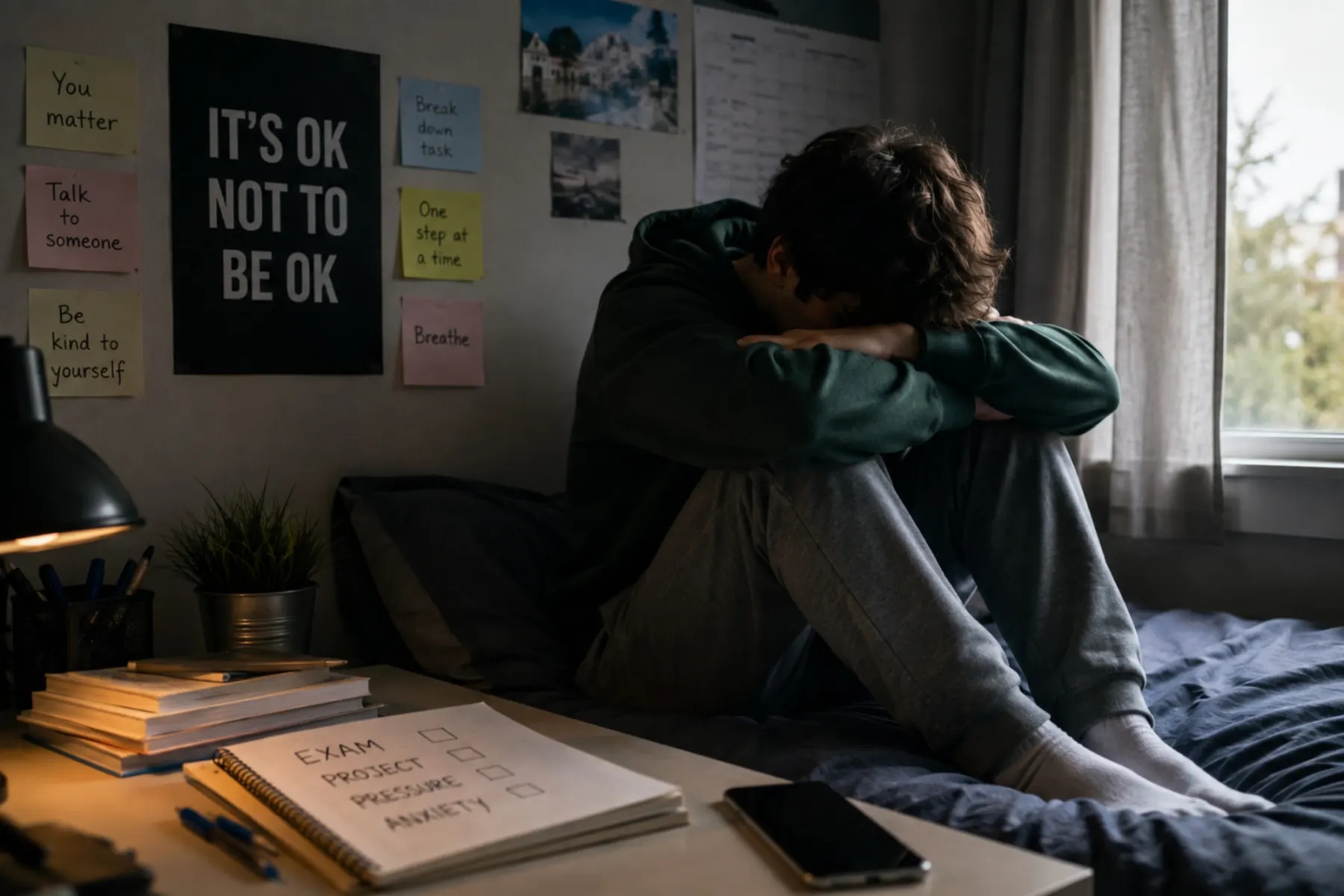
At sixteen, depression may appear alongside social withdrawal, disrupted sleep, school pressure, loneliness or a feeling that the future no longer contains much to look forward to.
At twenty, the circumstances are different again. Leaving school, starting university, entering employment, paying rent, forming adult relationships and becoming financially independent can arrive at precisely the period when many mental-health conditions first become apparent.
That is why discussing depression between the ages of 10 and 20 requires more than producing one prevalence figure.
It covers three distinct developmental periods, two different parts of Ireland’s mental-health system and an enormous transition from childhood to adulthood.
It also requires statistical caution.
Ireland does not currently have one continuously updated annual national survey telling us exactly how many 10- to 20-year-olds have a clinically diagnosed depressive disorder in August 2026.
Instead, the picture has to be assembled from large national youth surveys, longitudinal studies, health-service data, school-age wellbeing research and the rapidly rising demand reported by organisations supporting young people.
Taken together, those sources point in the same broad direction:
mental-health difficulties among young people have become a much more visible and substantial challenge in Ireland, depression and anxiety had already increased before Covid-19, and demand for help has continued to grow after the pandemic.
But growing demand for mental-health services is not automatically proof that the underlying prevalence of depression has increased by exactly the same amount.
More young people may also be recognising problems earlier, discussing mental health more openly and becoming more willing to ask for help.
That distinction is important.
Depression Is Not the Same as Having a Bad Week
Adolescence contains disappointment, conflict, examination stress, relationship problems and rapidly changing emotions.
Feeling sad after an argument, anxious before an examination or exhausted after several difficult days does not automatically mean somebody has clinical depression.
The HSE distinguishes ordinary low mood from more persistent depression.
Clinical depression involves symptoms such as sustained sadness or hopelessness, loss of interest in previously enjoyable activities and a level of difficulty that begins interfering with school, study, work, friendships or family life. Symptoms commonly persist for at least two weeks, although diagnosis should be made by an appropriately qualified professional rather than by applying an online checklist.
Among children and adolescents, depression may also look different from the stereotype of somebody visibly crying all day.
The HSE lists persistent irritability, fatigue, concentration difficulties, loss of confidence, feelings of guilt or worthlessness, sleep and appetite changes, withdrawal from friends and family and declining school functioning among possible signs. Thoughts of self-harm or suicide require particularly urgent attention.
The HSE estimates that approximately one in five young people may experience depression before the age of 18, with onset becoming more likely after the age of 13. Most cases are described as mild to moderate rather than severe.
That does not mean one in five Irish teenagers is depressed at any particular moment.
It refers to the possibility of experiencing depression by the age of 18.
The distinction between lifetime risk and current prevalence matters enormously.
The Warning Signs Were Visible Before the Pandemic
The deterioration in youth mental-health indicators did not begin with Covid-19.
Ireland’s largest dedicated youth mental-health research programme, the My World Survey, provides one of the clearest long-term comparisons.
The second survey involved more than 19,000 young people and compared results with the first study published in 2012.
Among adolescents, the proportion reporting very severe depressive symptoms more than doubled, from 4 per cent to 9 per cent between the two surveys. Moderate and severe depressive symptoms also increased, as did anxiety. Adolescents additionally reported lower self-esteem and optimism than the earlier generation surveyed.
Independent ESRI analysis of the changing experiences of 13-year-olds has similarly noted that My World Survey data showed rising adolescent depression and anxiety between 2010/11 and 2018/19, together with a widening gender gap.
That timing is important.
Social media, school pressure, changing peer relationships, family circumstances and broader social changes were already being investigated as potential influences before anyone had heard of Covid-19.
The pandemic therefore arrived on top of a problem that was already developing.
Covid-19 Was an Accelerator — but Not the Entire Explanation
The pandemic created an almost unprecedented disruption of childhood and adolescence.
Schools closed.
Sports stopped.
Friendship groups became physically separated.
Major examinations changed.
College students attended courses remotely.
Young people lost many of the ordinary routines through which independence, social confidence and identity are developed.
The effects were not uniform.
Some adolescents found relief from difficult school environments or social pressure.
Others experienced loneliness, family conflict, fear, bereavement, uncertainty and long periods without normal peer contact.
International research generally found increased depression and anxiety among young people during the pandemic, particularly among older adolescents and girls.
Ireland’s post-pandemic indicators suggest that wellbeing did not simply return immediately to its previous position when restrictions disappeared.
A 2025 UNICEF comparison of 43 OECD and EU countries placed Ireland 24th for adolescent mental wellbeing. Nearly one in three Irish 15-year-olds reported low life satisfaction in the data used for the comparison. The underlying comparison principally examined changes between 2018 and 2022.
Low life satisfaction is not a diagnosis of depression.
But when viewed beside increased depressive symptoms in earlier Irish surveys and rising use of youth mental-health services, it adds another piece to the picture.
By 2026, the Demand for Help Is Rising Faster Than Ever
Perhaps the most current indication of pressure comes not from a national prevalence survey but from the organisations young people are approaching for help.
Jigsaw, the National Centre for Youth Mental Health, accepted 11,064 referrals during 2025, the highest number in its 20-year history and 23 per cent more than in 2024.
Then demand accelerated again.
During the first quarter of 2026, Jigsaw received 3,909 referrals, compared with 2,946 during the same period in 2025 — an increase of 33 per cent.
Jigsaw primarily supports 12- to 25-year-olds experiencing mild to moderate mental-health difficulties. It should therefore not be interpreted as a database of clinically diagnosed depression.
The numbers nevertheless show something highly relevant:
more young people are actively seeking early mental-health support.
Jigsaw delivered more than 62,000 clinical contacts in 2025 while reporting that its national waiting time had fallen from eight weeks to four through changes in how young people first access therapy.
Another window is provided by spunout’s Text About It service.
It recorded 52,748 conversations during 2025, a 9.4 per cent increase from the previous year. Anxiety, stress and isolation were the leading concerns, followed by intimate relationships and school.
Again, these conversations cannot be converted directly into a national depression rate.
But they help show what is occupying young minds.
And depression rarely exists completely separately from anxiety, isolation, sleep problems, school pressure, relationship difficulty or low self-esteem.
Age 10 to 12: Depression Can Be Easy to Miss
The youngest children covered by this article deserve separate consideration.
A ten- or eleven-year-old generally has less emotional vocabulary and less independence than a 17-year-old.
They may know that they feel wrong without being able to explain why.
Depression at this age can therefore be expressed behaviourally.
A child may become angry more frequently.
They may stop joining friends.
School attendance may become difficult.
Academic performance may decline.
Sleep or eating may change.
Repeated headaches or stomach aches may appear without an obvious physical explanation.
Activities that once produced excitement may stop mattering.
The HSE specifically notes that depression can occur in children considerably younger than adolescence, although its likelihood increases after 13.
For this age group, adults are particularly important because a young child cannot reasonably be expected to navigate Ireland’s mental-health system alone.
Parents, guardians, teachers, GPs, school staff and youth workers may be the first to recognise that something has changed.
This creates both an opportunity and a vulnerability.
A child surrounded by attentive adults can receive help before symptoms become severe.
A child experiencing neglect, abuse, instability or severe family difficulty may have fewer adults capable of recognising the problem.
Age 13 to 17: The Period When Risk Becomes Much More Visible
From early adolescence onwards, several developmental changes arrive simultaneously.
Peer relationships become more important.
Identity becomes more important.
Physical appearance and body image become more prominent.
Academic expectations increase.
Romantic relationships begin.
Young people acquire greater independence but do not yet possess full adult control over their circumstances.
The transition to secondary school itself can reshape friendship groups and place children into a larger and more demanding educational environment.
By senior cycle, examination pressure and decisions about university, apprenticeships and employment add another layer.
The HSE identifies school stress, bullying and cyberbullying, friendship difficulties, bereavement, family instability, abuse, neglect and a family history of mental-health problems among factors that may increase the likelihood of depression in children and adolescents. It also stresses that depression commonly results from more than one factor rather than one identifiable cause.
That multiple-cause model is essential.
There is rarely a legitimate basis for saying:
“social media caused this teenager’s depression”
or
“school pressure caused the problem.”
A young person may possess a biological vulnerability, experience bullying, sleep poorly, feel isolated and then face an academic setback.
Each factor can interact with the others.
Social Media Matters — but the Simple Explanation Is Too Easy
Few subjects generate more confident claims about young people’s mental health than smartphones and social media.
The relationship deserves attention.
Online platforms expose young people to comparison, highly edited images, popularity metrics, cyberbullying, harmful content and a social environment that can continue long after the school day has finished.
Digital life can also interfere with sleep.
But it can simultaneously provide friendship, information, peer communities and support to people who may feel isolated offline.
Research reviewed by the ESRI has noted associations between high levels of digital engagement and poorer wellbeing, particularly among girls, while also acknowledging that other research challenges simple causal interpretations and points towards school-related stress and other influences.
The defensible conclusion is therefore not that phones have single-handedly created adolescent depression.
It is that the social environment in which adolescence now occurs has changed profoundly, and digital experiences can amplify either support or distress depending on how they are used and what happens to the individual online.
Bullying Can Follow a Child Home
Traditional school bullying had one natural limitation.
Eventually the school day ended.
Digital communication can remove that boundary.
Harassment can continue through messaging applications, group chats, social platforms and shared photographs.
For a young person already experiencing low self-esteem, exclusion or anxiety, repeated humiliation can become particularly damaging.
The HSE explicitly identifies bullying and cyberbullying as risk factors associated with depression among children and young people.
Recent ESRI research on bullying also points to its association with negative psychosocial and educational outcomes, including increased depression and anxiety.
But again, association should not be confused with an automatic diagnosis.
Not every bullied child develops depression.
The presence of supportive parents, friends, teachers or another trusted adult can significantly change how difficult experiences are processed.
Girls and Young Women Are Showing Particular Signs of Pressure
One of the clearest patterns in Irish youth mental-health research is gender.
The increase in adolescent depression and anxiety documented before the pandemic was accompanied by a widening gender gap.
Historical Growing Up in Ireland research following young people into early adulthood found elevated depressive-symptom scores among more than one fifth of 20-year-old men and almost one third of 20-year-old women.
Those results relate to an earlier cohort and should not be presented as the current 2026 prevalence of depression among 20-year-olds.
Their value is in showing that the gender difference was already apparent as young people entered adulthood.
There are many possible explanations and no single one should be treated as sufficient.
Differences may involve social pressure, body image, interpersonal relationships, exposure to particular forms of online comparison, willingness to report symptoms, help-seeking behaviour and broader developmental or biological influences.
Boys and young men face a different problem.
Lower reported depression does not automatically mean lower vulnerability in every dimension.
Young men may be less likely to identify distress as depression or to seek help early.
A mental-health strategy therefore needs to recognise both higher reported symptom levels among many young women and the risk that some young men remain less visible to services.
LGBTQI+ Young People Face a Much Higher Burden
Some of the strongest evidence of unequal mental-health risk involves LGBTQI+ young people.
The 2024 Being LGBTQI+ in Ireland study, conducted by a Trinity College Dublin-led research team in collaboration with Belong To, found extremely high levels of distress among participating 14- to 18-year-olds.
Among 631 respondents in that age group, 50 per cent reported severe or extremely severe symptoms of depression.
The study also reported very high levels of anxiety, self-harm and suicidal thoughts. Compared with adolescents in My World Survey 2, LGBTQI+ participants had roughly three times the level of severe or extremely severe depression and anxiety.
These figures come from a specific survey of LGBTQI+ young people rather than a random sample of every LGBTQI+ teenager in Ireland, so they should be interpreted within that study design.
Even with that caution, the disparity is too large to ignore.
The findings point towards the effects of minority stress, discrimination, bullying, rejection and social isolation rather than suggesting that LGBTQI+ identity itself is a mental illness.
Belong To’s research also found that supportive community connections and LGBTQI+ friendships were associated with positive effects on mental wellbeing.
That is important because it identifies not only risk, but protection.
Age 18 Is More Than a Birthday in the Mental-Health System
At 17 years and 11 months, a young person with moderate-to-severe depression may be within Child and Adolescent Mental Health Services.
At 18, the administrative landscape changes.
CAMHS is a specialist HSE service for people under 18 experiencing moderate-to-severe mental-health difficulties. Access requires referral from a GP or another healthcare professional.
A young adult then moves towards adult mental-health services.
That transition can occur at the same time as leaving school, moving away from home, beginning university or employment and changing social networks.
The HSE itself has recognised the importance of this transition.
Its current three-year Child and Youth Mental Health Action Plan specifically includes improving movement from child and adolescent services into adult services at age 18. It also proposes a single point of access and a national electronic health record so that young people do not repeatedly have to reconstruct their clinical history as they move between services.
For 18- to 20-year-olds, one important continuity remains:
Jigsaw supports young people through age 25.
That means turning 18 does not end access to its early-intervention service.
The Pressures at 18 to 20 Are Different
Early adulthood contains a new set of vulnerabilities.
School structure disappears.
Some young people leave their family home.
Others want to leave but cannot afford to.
College students may move to unfamiliar cities.
Those entering work have to adapt to employment and adult financial responsibilities.
Relationships become more serious.
Friendship networks can fragment.
Some young people experience unemployment or discover that the educational route they chose does not suit them.
Ireland’s housing and cost-of-living pressures can become relevant for this age group in ways that barely affected them several years earlier.
Text-based support services have reported young people discussing anxiety, stress, isolation, relationships, school and financial concerns.
The critical point is that depression at twenty does not necessarily look like depression at ten.
The developmental environment has changed.
Depression Can Affect Education Long Before Anybody Uses the Word
One of the most immediate consequences is concentration.
A young person who sleeps badly, feels exhausted, has little motivation and struggles to concentrate may begin falling behind academically.
Homework becomes harder.
Absence increases.
A poor result then reinforces feelings of failure.
The student withdraws further.
This can create a feedback loop in which mental-health difficulty produces academic problems and academic problems intensify mental distress.
The HSE lists school difficulties, impaired concentration, loss of energy and social withdrawal among possible effects of depression in young people.
Schools therefore occupy an important position.
They are not psychiatric clinics.
Teachers should not be expected to diagnose depression.
But schools see children repeatedly and can notice changes in attendance, behaviour, friendships and performance that may not be visible elsewhere.
A teacher, guidance counsellor, Student Support Team, school nurse where available or another trusted adult may be the person who first encourages a young person to seek professional help.
Friendship Can Become Both a Risk and a Protection
Adolescents increasingly orient themselves towards peers.
That creates vulnerability when friendships collapse.
It also creates one of the strongest potential protections against isolation.
A young person who stops replying to messages, withdraws from a sports team, avoids meeting friends and spends progressively more time alone may be experiencing depression — although there are many other possible explanations.
The response should not be immediate amateur diagnosis.
It should be curiosity.
What has changed?
How long has it been happening?
Is the person still functioning normally?
Are there other signs?
The HSE advises adults concerned about a young person to remain calm, take the problem seriously, avoid judgement and encourage discussion with somebody trusted.
That sounds simple.
For a teenager deciding whether to disclose something they find frightening or embarrassing, the way the first adult responds can matter enormously.
Depression Affects Families Too
Youth depression is rarely confined to the individual.
Parents may feel guilty, frightened or powerless.
Siblings notice conflict or withdrawal.
Family routines change around school attendance, medical appointments or crisis management.
Parents may reduce work in order to care for a child.
Disagreement can arise over whether behaviour is illness, ordinary adolescence or lack of discipline.
That uncertainty can delay help.
It is therefore important to distinguish between explaining behaviour and excusing every behaviour.
A teenager with depression still needs boundaries and family relationships.
But punishment alone cannot treat a mental-health disorder.
For families, professional assessment can provide something enormously valuable even before treatment begins:
a clearer understanding of what they are dealing with.
The Link With Self-Harm and Suicide Requires Particular Care
Most young people with depression do not die by suicide.
Depression and suicidal behaviour are not interchangeable.
But persistent depression can increase the risk of self-harm and suicidal thoughts, which is why clinicians treat those symptoms seriously.
The HSE includes thoughts of suicide or self-harm among warning signs requiring attention.
Current support-service data also demonstrate why the issue cannot be treated as rare or theoretical.
ISPCC reported a noticeable increase in suicide-related contacts to Childline during the summer of 2026, while describing isolation, abuse and loss of school routine among difficulties raised by children contacting the service.
Such service data do not measure national suicide prevalence.
They do show that some children are reaching support services at moments of profound distress.
The Most Important Finding May Be That Early Help Works
The rising numbers can make the situation appear relentlessly negative.
There is another side to the evidence.
A major evaluation of young people receiving Jigsaw support found that 57 to 66 per cent showed reliable improvement in mental health, with young people entering services at higher levels of distress often showing substantial gains.
The research also found that delays exceeding 60 days were associated with an 11 per cent reduction in improvement rates among 12- to 16-year-olds.
The study concerned Jigsaw’s broader youth mental-health population, not exclusively clinically diagnosed depression.
But its implication is highly relevant:
timing matters.
Mental-health support does not have to wait until somebody reaches crisis.
The ideal system catches difficulty while school, friendships, family relationships and ordinary daily functioning remain recoverable.
Ireland’s Biggest Structural Problem Is the Gap Between Need and Capacity
For more severe difficulties, access can become harder.
At the end of 2025, 4,462 children and young people were waiting for CAMHS appointments, according to information presented to the Oireachtas Health Committee. Of those, 602 had been waiting for more than a year. Around 69 per cent had been seen within 12 weeks.
The HSE itself states that waiting time depends partly on local demand and acknowledges that an initial CAMHS appointment can sometimes take a year.
These figures concern CAMHS as a whole, not depression alone.
CAMHS also treats conditions including severe anxiety, eating disorders, psychosis and other complex mental-health difficulties.
The waiting list nevertheless illustrates a wider problem.
Ireland has increasingly succeeded in encouraging young people to speak about mental health.
The health system must then be capable of responding when they do.
Awareness without sufficient treatment capacity can create a new frustration:
a young person finally asks for help and discovers that the appropriate service has a queue.
Primary Care Is Supposed to Carry Much of the Earlier Need
Not every child with low mood should be referred to CAMHS.
That would overwhelm specialist services and would not necessarily represent appropriate care.
The HSE’s Primary Care Psychology service provides assessment and psychological treatment for difficulties including depression, anxiety, stress, self-esteem problems, bereavement and relationship difficulties.
It accepts referrals from health professionals and also allows direct self-referral.
Primary Care Psychology is not intended for urgent crises, suicidal thoughts or moderate-to-severe conditions requiring specialist treatment.
Those cases require a different level of care.
But primary care has waiting-time pressures too.
The HSE states that in some areas people may wait more than a year for an initial Primary Care Psychology appointment.
This demonstrates why Ireland’s mental-health challenge is not solely about expanding CAMHS.
The entire pathway matters.
The “Missing Middle” Is Where Many Teenagers Can Fall
Imagine a teenager who is clearly struggling.
They are sleeping badly.
Their grades are falling.
They have stopped seeing friends.
They are frequently tearful or angry.
But they are not psychotic, medically unstable or in an immediate crisis.
Their difficulty may not require specialist psychiatric treatment.
It is nevertheless too serious to ignore.
This is sometimes described as the “missing middle” of youth mental health: people whose problems are substantial enough to require genuine help but who may not meet thresholds for highly specialised services.
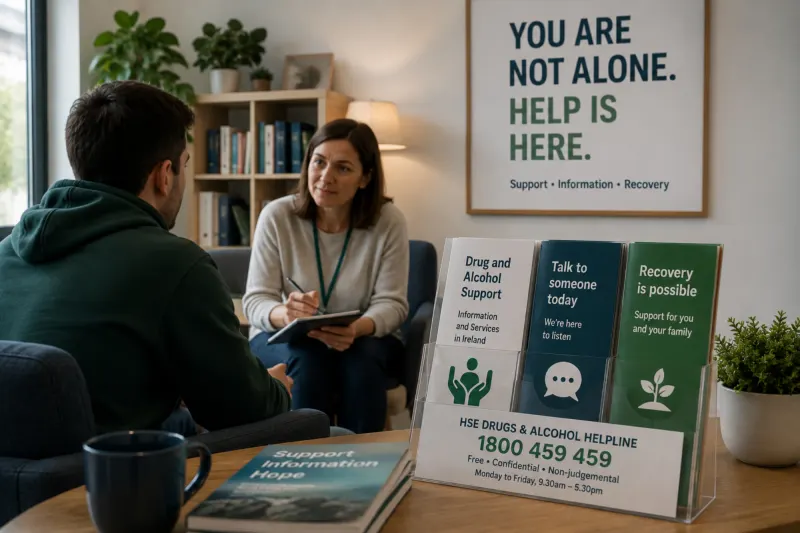
Jigsaw’s model is specifically designed around earlier intervention for 12- to 25-year-olds with mild-to-moderate mental-health difficulties. Its support is free, confidential and available in person within service areas and online. Jigsaw is not an emergency crisis service.
The extraordinary growth in its referrals suggests how important that middle layer has become.
The System Is Now Being Redesigned
Ireland is not ignoring these structural problems.
The HSE’s Child and Youth Mental Health Action Plan sets out 16 areas of reform over a three-year period.
Among the proposed changes are:
a single point of access for child and youth mental-health referrals;
better integration between statutory, primary-care and voluntary services;
improved transition from CAMHS into adult services;
greater involvement of children and families in service design;
and electronic health records across CAMHS.
The ambition behind the single point of access is particularly important.
Families should not need specialist knowledge of the healthcare bureaucracy in order to identify which door to knock on.
A child may need disability services, primary-care psychology, CAMHS, voluntary support or several services working together.
The proposed model is intended to reduce the situation in which families repeatedly move from one service to another seeking the correct pathway.
More Staff Are Being Added in 2026
Budget 2026 included funding for 300 additional whole-time-equivalent mental-health staff across Ireland’s services.
Additional staffing does not automatically solve access problems.
Mental-health professionals require training.
Specialist clinicians cannot be produced immediately.
Geographical distribution matters.
Retention matters.
And increasing staffing while referrals increase even faster may produce only limited reductions in waiting times.
Nevertheless, capacity cannot improve sustainably without workforce growth.
The more important measure over the next several years will therefore be not how many posts were announced, but whether young people actually experience shorter waits and smoother pathways.
Schools Are Becoming More Explicitly Part of Prevention
Another important change is occurring outside the health service.
In 2025, the Department of Education and Jigsaw launched Neart, a national mental-health and wellbeing programme for post-primary schools delivered with the National Educational Psychological Service.
The programme includes resources and training for students, parents and school staff and is intended to strengthen whole-school approaches to mental health rather than waiting until problems become clinical emergencies.
Jigsaw reported engagement with 623 post-primary schools during 2025, more than 80 per cent of post-primary schools nationally.
This may ultimately prove just as important as treatment expansion.
A health system cannot clinically treat its way out of every source of adolescent distress.
Schools, families, sports clubs, youth organisations and communities form part of the mental-health environment too.
What Happens Between 2027 and 2029?
Predicting an exact national depression rate three years in advance would be unjustified.
There are too many variables.
But several developments are already foreseeable.
First, demand for youth mental-health support is likely to remain high.
The scale of Jigsaw’s 2025 referrals and further 33 per cent increase during the first quarter of 2026 indicate no immediate return to low service demand.
That does not necessarily mean depression itself will continue increasing at 33 per cent per year.
Referral growth cannot be used that way.
Greater awareness and easier access can themselves increase demand.
Second, earlier intervention is likely to become more important.
If Jigsaw, primary care, schools and digital services can support more young people before conditions become severe, pressure on specialist services could eventually be reduced.
Third, the transition around age 18 should become a major test of the HSE reform programme.
The current action plan explicitly recognises this problem. Whether young people actually experience continuity between child and adult services will determine whether policy reform produces a practical difference.
Fourth, digital mental-health support will probably become a permanent part of the system.
Young people already seek help disproportionately through channels that allow privacy, anonymity and out-of-hours access. Text About It recorded more than 52,000 conversations in 2025, with demand peaking outside conventional service hours.
Fifth, prevention will increasingly have to address particular high-risk groups rather than treating “young people” as one homogeneous population.
Gender, disability, sexuality, family circumstances, bullying, discrimination, poverty, location and access to supportive adults can all alter risk.
Where a 10- to 20-Year-Old Can Get Help in Ireland
Ireland already has a substantial network of public and charitable mental-health supports. The correct starting point depends on age, severity and whether the situation is urgent.
GP — the most important general medical starting point
For a young person showing persistent signs of depression, the HSE advises contacting a GP.
A GP can discuss symptoms, consider whether physical or other mental-health conditions may be contributing and identify the most appropriate next level of support. They can refer to specialist services where necessary.
For a parent who does not know whether their child’s problem is ordinary adolescent distress, depression, anxiety or something else, this is often the most practical first clinical step.
HSE Primary Care Psychology
Primary Care Psychology supports depression, anxiety, stress, bereavement, self-esteem difficulties and other psychological problems that affect day-to-day life.
People can be referred by a GP or another health professional, and self-referral is also possible. The service is not designed for an urgent mental-health crisis, suicidal thoughts or moderate-to-severe psychiatric illness.
CAMHS — specialist care for under-18s
Child and Adolescent Mental Health Services are intended for people under 18 experiencing moderate-to-severe mental-health difficulties that substantially interfere with daily functioning.
Depression is one of the conditions treated.
Access requires referral by a GP or another healthcare professional.
Because CAMHS is a specialist service, not every young person experiencing low mood or mild depression will meet the threshold for referral.
Adult mental-health services — particularly important from 18 onwards
At 18, young people move outside the normal CAMHS age range.
A GP remains an important entry point for assessment and referral to appropriate adult mental-health services.
Young people already attending CAMHS should have their transition considered as part of clinical planning, an area the HSE’s current reform programme is specifically seeking to improve.
Schools and colleges
A teacher, guidance counsellor, Student Support Team, youth worker or other trusted adult can help a young person begin a conversation and identify appropriate services.
For young adults attending universities, technological universities and colleges, institutional counselling and student-health services may provide another important route.
These services should not replace emergency or specialist psychiatric care when severe illness is present, but they can provide valuable early support.
Jigsaw — ages 12 to 25
Jigsaw – The National Centre for Youth Mental Health is a registered charity providing free, confidential and non-judgmental therapy and early mental-health support for young people aged 12 to 25.
Support is offered through local services and online.
Jigsaw is designed principally for mild-to-moderate difficulties and explicitly states that it is not an immediate crisis service.
For many teenagers and young adults, this makes Jigsaw an important bridge between coping alone and needing specialist psychiatric services.
Childline by ISPCC — children and young people up to 18
Childline, operated by the ISPCC, provides a confidential listening service to children and young people in Ireland.
It operates around the clock and allows children to talk about anything that is worrying them, not only a diagnosed mental-health condition.
That distinction matters particularly for younger children.
A ten-year-old does not need to know whether they have depression before being allowed to tell somebody that they feel frightened, lonely or unhappy.
spunout and Text About It
spunout provides youth-focused mental-health information and signposting, while its Text About It service provides free anonymous messaging support around the clock.
The service is widely used for anxiety, stress, isolation, relationship difficulty, sadness and other emotional problems and can help somebody through a difficult moment while identifying further support where necessary.
It is not a replacement for ongoing clinical treatment where a depressive illness requires professional care.
Belong To — LGBTQ+ young people
Belong To – LGBTQ+ Youth Ireland provides youth groups and support services for LGBTQ+ young people, with its youth groups welcoming people aged 14 to 23.
Its services include youth support and access to professional counselling, and it operates within a wider national network of LGBTQ+ youth groups.
Given the markedly elevated mental-health difficulties identified among LGBTQI+ adolescents in Irish research, specialist environments in which young people feel safe and understood can be particularly important.
Pieta — when self-harm or suicide is part of the crisis
Pieta provides crisis support for people experiencing thoughts of suicide or self-harm.
Its crisis helpline is available 24 hours a day, every day. Call 1800 247 247 or text HELP to 51444. More information is available through https://www.pieta.ie/how-we-can-help/helpline/.
When It Is an Emergency
There is an important boundary between somebody who needs an appointment and somebody who needs immediate protection.
The HSE advises calling 112 or 999, or going to the nearest emergency department, if a person is about to harm themselves or somebody else.
A parent or friend does not need to prove that the person definitely intends to act before taking a serious threat seriously.
If the situation appears dangerous, safety comes first.
What Parents Can Do Before They Know Exactly What Is Wrong
Parents understandably want to solve the problem.
Often the first useful action is simpler.
Notice the change.
Ask about it.
Listen.
Avoid immediately explaining why the young person “shouldn’t” feel that way.
Avoid turning the first conversation into an argument about school results, phone use or behaviour.
And avoid assuming that asking about depression or suicidal thoughts will somehow create those thoughts.
If concerning changes persist, arrange professional assessment.
The HSE recommends staying calm and caring, taking what the young person says seriously and encouraging them to speak with another trusted person where appropriate.
For teenagers particularly, being listened to does not mean agreeing with every conclusion they draw.
It means treating their distress as real.
What Ireland Should Not Do
Ireland should not label an entire generation mentally ill.
Most young people do not have severe depression.
Many report strong friendships, family support and positive lives.
My World Survey 2 itself found increased levels of social, family and adult support alongside worsening indicators in other areas.
Nor should every unpleasant emotion be medicalised.
Sadness after bereavement is not automatically illness.
Exam anxiety is not automatically an anxiety disorder.
A difficult breakup is not automatically clinical depression.
Resilience includes experiencing painful emotions and recovering from them.
But the opposite mistake is equally dangerous:
assuming that all adolescent distress is simply a phase that will disappear.
Persistent hopelessness, withdrawal, loss of pleasure, severe changes in behaviour, self-harm or suicidal thinking require attention.
The goal should be neither overdiagnosis nor dismissal.
It should be proportionate help at the appropriate time.
The Numbers Tell Two Stories at Once
Ireland’s youth mental-health statistics are troubling.
Very severe depressive symptoms among adolescents more than doubled between the two My World surveys.
Almost one in three 15-year-olds in the UNICEF comparison reported low life satisfaction.
Jigsaw received more than 11,000 referrals in 2025 and another 3,909 during only the first three months of 2026.
More than 4,400 children and young people were waiting for CAMHS appointments at the end of 2025.
Those figures describe genuine pressure.
But there is another story inside them.
Young people are speaking.
Families are seeking help.
Schools are discussing mental health more openly.
Community services have expanded.
Jigsaw has demonstrated measurable improvement among many young people receiving early intervention.
The HSE has created a national office and reform programme specifically for child and youth mental health.
Additional staff are being recruited.
A single access pathway is being designed.
School-based prevention is expanding.
And youth organisations are increasingly meeting young people through the digital channels they actually use.
The Next Challenge Is Not Awareness — It Is Response
Ireland has made enormous progress in one area.
A generation ago, depression among teenagers was discussed far less openly.
Today, young people routinely encounter the language of mental health in schools, media, sports organisations, universities and online.
That cultural change can save lives because it reduces the distance between experiencing distress and asking for help.
But it also raises expectations.
Once society tells a 15-year-old:
“Speak up when you are struggling,”
the next sentence cannot be:
“Now wait a year.”
That is the central challenge for Ireland between 2026 and the end of the decade.
Depression among young people cannot be eliminated completely.
No health system can remove grief, relationship breakdown, disability, family conflict, bullying, biological vulnerability or every source of human distress.
What a functioning system can do is recognise problems earlier, distinguish ordinary distress from illness, provide rapid community support, reserve specialist psychiatry for those who need it most and ensure that young people do not disappear between services when they turn 18.
The age group from ten to twenty contains some of the fastest and most consequential changes of human life.
A child enters it dependent on parents and primary school.
A young adult leaves it legally independent and potentially working, studying, renting and forming an adult life.
Mental-health care therefore cannot be designed around one model for that entire decade.
A ten-year-old needs adults able to notice.
A fourteen-year-old needs safe places to talk.
A seventeen-year-old may need specialist treatment without months of uncertainty.
And a twenty-year-old needs a mental-health system that does not assume childhood difficulty vanished on their eighteenth birthday.
The evidence from Ireland is serious.
It is not hopeless.
Depression is treatable. Early intervention can produce meaningful improvement. Supportive adults, friendships, community organisations and accessible professional care can change the trajectory of a young person’s life.
The question facing Ireland is therefore no longer whether youth mental health deserves attention.
That argument has largely been won.
The question now is whether every young person who finds the courage to ask for help can reach the right help before distress becomes crisis.
Source & Transparency
This article is published by Ireland Newspaper for editorial and informational purposes.
Published: 11 August 2026 · Updated: 11 August 2026

Newsroom Ireland Newspaper
Ireland Newspaper editorial team prepares daily news coverage for readers in Ireland and abroad.